

Research-based guide. Written from published sources and product listings; we have not tested these products ourselves. How we research · Last checked: Oct 16, 2026.
Disclosure: As an Amazon Associate we earn from qualifying purchases. Learn more.
Small closet organization ideas are essential for renters dealing with standard apartments or tiny homes. Most rental closets offer a single bar and a single shelf, but strict lease rules mean you can’t drill, nail or install permanent fixtures. If it feels impossible to organize a small closet without risking your security deposit, you’re not alone—there’s a method that works for even the barest, most cramped space.
Key Takeaways
- Choose renter friendly closet organization tools that never require drilling or permanent changes.
- Layer storage vertically and distribute weight carefully—especially on rods, doors, and shelves.
- Always check weight limits, clearance, and your lease before using storage upgrades.
- The Renter’s Small Closet Struggle: What You’re Up Against
- What Makes a Closet Organization Idea Truly Renter Friendly?
- Maximize Space Without Damage: The Best Renter-Friendly Closet Tools
- Pro Tips: How to Layer, Balance, and Store More in Tiny Closets
- Renter Nightmares & Mistakes To Avoid
- Quick Picks: Recommended Products & Layouts for Every Closet Shape
- FAQs: Renter Friendly Closet Organization
The Renter’s Small Closet Struggle: What You’re Up Against
Every apartment closet almost universally starts with just one rod and a shelf. The closet itself isn’t the problem—it’s the lack of allowed modification for renters. Most standard small closet organization ideas you see online assume you can install permanent racks, anchor hardware or even build shelving. In a rental, this just leads to trouble. Landlords nearly always prohibit structural changes because they lead to damage and security deposit disputes. And while closet organizers at the store are plentiful, most require screws or other alterations you can’t do without risking your lease.
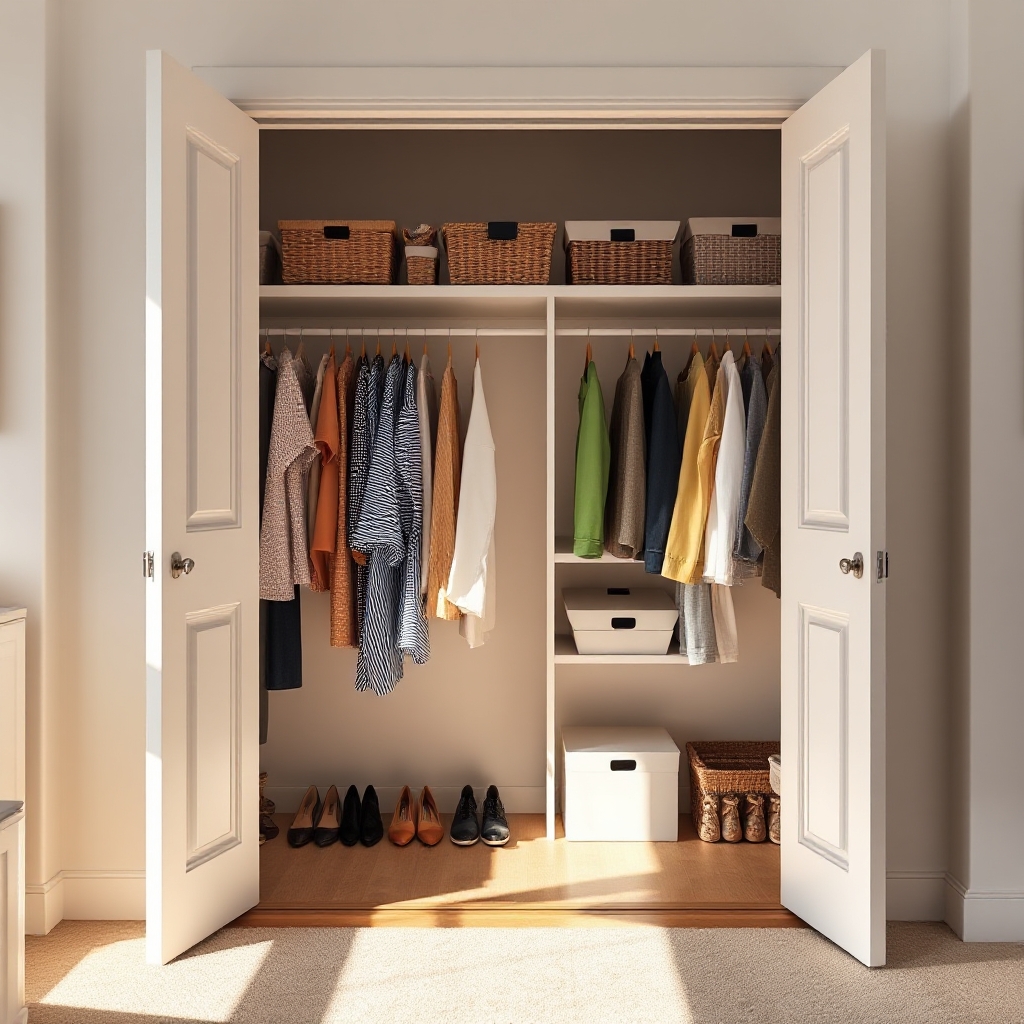
According to Clutterless Nest, “Every apartment closet starts this way — bare bones, limited, and designed as if nobody actually owns clothes.” That leaves renters constantly battling cramped hangers, tangled shoes and limited shelf access—plus daily frustration. Organizing a small closet as a renter is about fitting your real wardrobe in, not just what looks good in a home magazine.
If this sounds familiar, you’re the target for renter friendly closet organization: strategies that never put your deposit at risk and work even in the most minimal layouts. For more solutions across your home, see our full hub on small apartment home improvement.
What Makes a Closet Organization Idea Truly Renter Friendly?
Not all small closet storage ideas are safe for tenants. Renter friendly closet organization always means:
- Zero drilling, screwing, nailing, or permanent hardware
- No adhesive that could damage paint or surfaces
- Only tools and organizers that can be removed without residue or repair
- Complying with your specific lease—most standard leases forbid anything except temporary, reversible updates
As clarified by The Aranger: “Renters cannot modify the structure of a closet without landlord approval, and most landlords do not give it.” That excludes nearly every closet kit made for homeowners.
In general, stick to:
- Tension rods (for double hanging or making vertical dividers)
- Clip-on organizers that hook over your current rod or shelf
- Over-door racks (ensure your door has 0.5 to 1 inch clearance at the top)
- Freestanding floor shelves or stacking fabric bins
For additional strategies that apply to any tight spot—closet, kitchen, entry, or bath—explore Storage & Organization for Small Spaces.
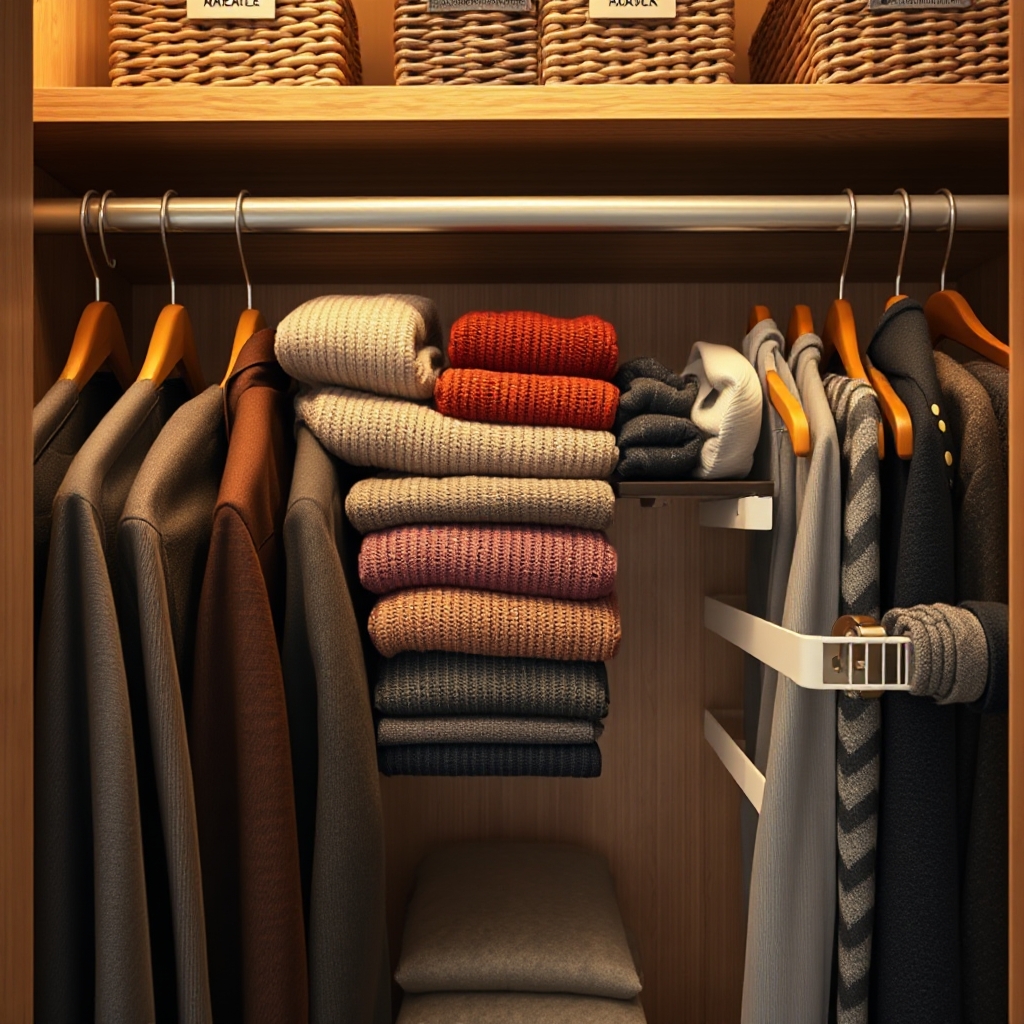
Always check weight limits: basic Command hooks are rated at 1-3 pounds for small sizes, 3-5 pounds for medium sizes and only work on smooth, fully-cured painted surfaces. (Source) Overloading these or slapping them on fresh or rough paint can rip the finish and lead to expensive repairs. Over-door hooks need a half to full inch of clearance, and weight should be spread out to avoid unbalancing hollow-core doors.
Maximize Space Without Damage: The Best Renter-Friendly Closet Tools
The right small closet storage ideas can double your storage—if you respect the limits of each product. Here’s what really works in a rental, according to research:
- Tension rods: These brace between side walls, or between an existing rod and the back of the closet. They require no hardware and leave no trace (source).
- Clip-on rod organizers: Hang off your existing rod to add shelves or extra hooks—no hardware, no sliding around.
- Over-door racks: These hook over the top edge—any rack or organizer must fit doors with 0.5 to 1 inch gap, and avoid overloading (especially hollow-core doors). Evenly distribute weight to prevent damage.
- Standalone shelving: Tall, slim shelves that stand inside the closet or just in front—these maximize storage without blocking access and can be removed at move out. Anti-tip straps are strongly recommended if your landlord allows (never drill without permission).
- Command strips/hooks: Rated for 1-5 pounds, essential for small items like bags, scarves, hats, but always check your wall finish and weight rating (see source).
Want more ideas on flexible, reversible storage elsewhere? Visit our guide to renter-friendly decor, which covers removable shelves, wall hooks, and accent upgrades that leave no trace behind.
Below, find a quick-reference for key renter tools and setup tactics:
| Tool/Organizer | Ideal Use | Weight Limit | Rental Safety | Key Dimensions |
|---|---|---|---|---|
| Tension Rod | Add 2nd rod or divide space | Check the product rating | 100% non-permanent | Measure wall-to-wall width first |
| Over-Door Rack | Shoes, baskets, light coats | Varies—check the product rating; spread load | No marks if weight spread | Check for 0.5-1″ top clearance |
| Clip-On Rod Shelf | Stack sweaters, bags, hats | Check the product rating | Removable, no wall marks | Check it fits your rod diameter |
| Freestanding Shelf | Shoes, stacked bins | Check the product rating; use an anti-tip strap | No install; watch for tip risk | Measure closet depth and height first |
| Command Hooks/Strips | Bags, hats, accessories | 1-5 lb (model dependent) | Only use on smooth, cured paint | Varies; never hang large items |
Always test any organizer in an inconspicuous spot and check your door clearance and holding power before loading up.
Pro Tips: How to Layer, Balance, and Store More in Tiny Closets
The top strategy is to organize a small closet by layering vertically—don’t just use the single rod and the floor. Here’s how to maximize closet space safely:
- Go “rod-first”: Start by doubling your hanging space using a tension rod below the main one. Hang shorter items up top and longer items below. Measure your longest shirts and trousers first so the two rows of clothes clear each other.
- Vertical shelving: Use slim, tall freestanding shelves (check they fit your closet depth) to hold shoes, baskets, or small bins. Place these at the side of the closet so you keep the middle clear for moving clothes. Never block access to the main rod.
- Balance the weight: Spread items evenly on racks and shelves. Avoid hanging all heavy items on a single hook or rod; this can strain hardware and with rental closets, may pull fixings out or damage hollow-core doors. Even for over-door racks, use all hooks instead of piling everything on one end (“pendulum” effect).
- Use top shelf risers: Add clip-on risers or stackable bins to divide shelf space for folded clothes or accessories. Measure your shelf depth to avoid ordering risers too large to fit.
According to rental storage guides, “Over-door hooks need a 0.5–1 in clearance between door and frame, and on hollow-core doors weight must be spread evenly to avoid a ‘pendulum’ pull-off.” (See source.)
One mistake is ignoring the height—most closets are underused above shoulder height. Add labeled bins or baskets on the top shelf for out-of-season items. And always leave at least two inches above freestanding shelves for easy removal.
Renter Nightmares & Mistakes To Avoid
Renters face recurring issues when they try to organize a small closet with unsafe or incompatible products. Most common pitfalls:
- Adhesive Damage: Using Command strips or hooks above the weight they are rated for—or on surfaces that aren’t fully cured/smooth—often rips paint right off when removed. This is a top cause of deposit deductions.
- Overloaded racks: Hanging too much weight on an over-door organizer, especially on hollow-core doors, can cause the organizer or even the door hardware to fail.
- Poor measurement: Ordering shelves, racks, or bins without checking closet depth, shelf width, or rod diameter. Many small closet organizers won’t fit flush and will end up wasted.
- Ignoring lease terms: Any drilling or unauthorized modification (like nailing in support brackets or installing new rods) nearly always violates your lease and risks your entire deposit.
Source data shows the main pain points are cramped and crowded spaces, items bunching on a single rod, uneven load on doors or shelves, and walls being damaged from adhesives or drilling. (See research)
| What To Avoid | Why |
|---|---|
| Screws, nails, or drilling | Almost always banned in leases; damages walls, shelves, or rods |
| Heavy-duty Command strips/hooks above rating | Strips pull off paint or drywall, especially with humidity or on flat latex |
| Wrong size organizers for your closet | Wasted money, awkward fit, inefficient storage |
| Stacking too much weight on over-door hooks | Pendulum effect: may rip door hardware out of hollow-core doors |
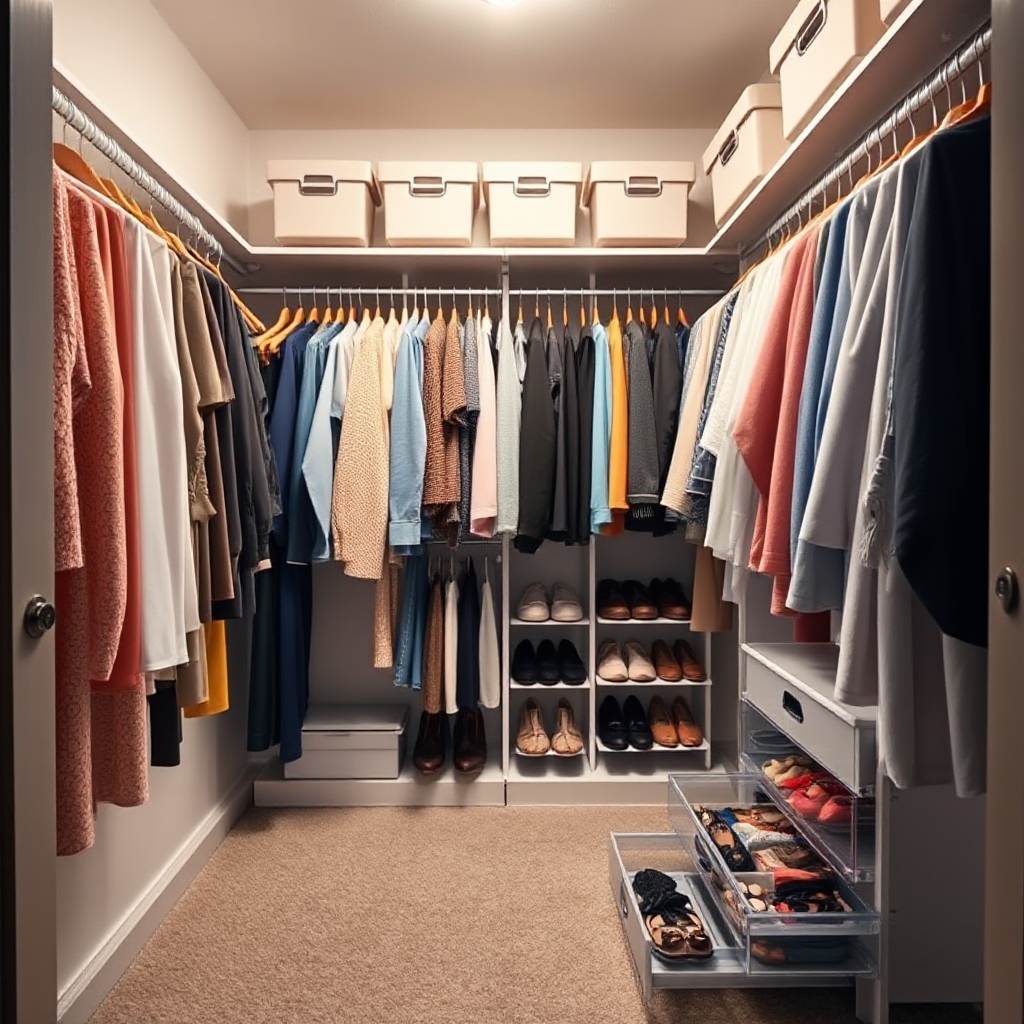
Quick Picks: Recommended Products & Layouts for Every Closet Shape
The best closet organizer for small closet spaces is one that matches your closet’s exact dimensions and won’t put your rental in jeopardy. Here’s a breakdown of recommended renter-friendly organizing products—and where they fit best:
| Closet Shape | Recommended Tools | Notes |
|---|---|---|
| Shallow (depth: 14-18″) | Slim freestanding shelves (depth 12-14″), Over-door hooks, Narrow tension rods | Use side-mounted rods to avoid crowding the center |
| Narrow (width: 24-32″) | Clip-on shelf risers, Single column hanging shoe racks, Vertical S-hooks | Maximize vertical hanging, skip wide organizers |
| High ceiling (80″+ height) | Double tension rods, Stackable bins, Tall narrow shelves | Store out-of-season items above, frequently used at eye level |
| Standard (basic reach-in) | Tension rod for double hanging, Over-door rack, Stackable fabric bins | Balance hanging vs. shelving for best effect |
For more product selection strategies and to see how we choose organizers, see our method for research-backed picks. For more on space-saving furniture and how it can transform a whole apartment, check out our small-space furniture guide.
FAQs: Renter Friendly Closet Organization
Are any adhesives guaranteed not to damage walls or paint?
No adhesive is 100% guaranteed safe. Command strips are widely used, but only on smooth, well-cured painted surfaces, within the product’s weight ratings: small hooks (1-3 lb), medium hooks (3-5 lb). Test in an inconspicuous area first, and never use them above these ratings. (Source)
Is it safe to use over-door racks on any door?
Only if your door has at least 0.5–1 inch clearance at the top, and you spread weight evenly. On hollow-core doors, never overload or hang weight on just one end. Too much force can pull out the hardware or warp the door. (Source)
Do I need permission to add a tension rod or freestanding shelf?
Usually not, but check your lease to be sure. A tension rod braces between two surfaces with zero hardware or wall touch—it is one of the most renter-friendly options. Freestanding shelves also require no installation but should use anti-tip straps where possible. (Source)
What’s the best way to maximize closet space without violating my lease?
Double up hanging space using tension rods, use vertical shelf risers and removable racks, and keep all organizers free of tools/drilling. Always match weight and size limits to your closet’s measurements and type.
Where can I find more damage-free storage ideas for other parts of my rented home?
See our small space upgrades homepage for researched solutions throughout your apartment or small home.
Conclusion
Organizing a small closet in a rental is about working within tough constraints—but with the right small closet organization ideas, you can maximize space without a single drill or lost deposit. Always focus on removable tools, vertical layering, weight distribution, and precise measurement. Need more guides or tips for your whole space? Explore all our research-based strategies for renters at Small Space Upgrades.
Ready to try these renter-friendly solutions? Measure your closet, pick the right tools, and reclaim your closet—without risking your lease. For expert product picks and in-depth tips on organizing a small closet, keep reading or bookmark this page.